How to Clean a Dishwasher Filter: Step-by-Step Guide and Warning Signs
A dirty dishwasher filter can leave food on your plates, create an unpleasant smell, and slow down the drainage cycle. You may run a full wash and still find small particles stuck to cups, bowls, or cutlery. In some cases, dirty water remains near the bottom even though the dishwasher has completed its program.
The filter catches food, grease, labels, and other debris before they reach the drain pump. When it becomes blocked, water cannot move through the dishwasher properly.
Many people looking for appliance repair in Sharjah assume the dishwasher needs a new pump when the real issue is a filter that has not been cleaned. Checking the filter is a useful first step, but it must be removed and refitted correctly. A loose or damaged filter can allow debris to enter parts that are harder to access.
Why Dishwasher Filter Cleaning Matters
The dishwasher filter sits near the bottom of the tub, usually underneath the lower spray arm. Its job is to collect food particles while allowing wash water to circulate through the machine.
As the filter fills with grease and food residue, water flow becomes weaker. The dishwasher may take longer to drain, dishes may feel gritty, and unpleasant smells can remain after the cycle. A badly blocked filter may also place extra pressure on the drain pump.
But here is the thing most people miss: rinsing the visible surface is not always enough. Grease can collect inside the mesh, around the filter housing, and in the sump area below it.
Regular cleaning helps the dishwasher wash and drain properly. It also gives you a chance to check for cracks, loose parts, and debris that could damage the pump.
The filter design varies between brands and models. Some have a removable cylindrical filter, while others use a flat screen or self-cleaning system. Check the user manual before pulling or twisting any part.
Warning Signs That the Dishwasher Filter Needs Cleaning
Check the filter if you notice any of these problems:
Steps to Clean a Dishwasher Filter Correctly
Cleaning the filter involves locating it, removing it safely, clearing trapped food, checking the surrounding area, and fitting it back properly. Following these steps can improve drainage and help prevent unpleasant smells and cleaning problems.
1. Switch Off and Empty the Dishwasher
Start by switching off the dishwasher. Disconnect it from power if the plug is safely accessible. If the dishwasher is hardwired, use the correct electrical isolation method before touching parts inside the tub.
Remove all dishes, cutlery, and loose items. Check the bottom of the dishwasher for broken glass, bones, labels, or sharp food packaging before reaching inside.
If water is sitting in the bottom, remove some of it with a cup or absorbent cloth. This will make the filter area easier to inspect. Wear gloves if the water is dirty or contains sharp debris.
Place a towel near the open dishwasher before starting. Water trapped inside the filter may spill when the part is lifted.
2. Remove the Lower Dishwasher Rack
Pull the lower rack toward you and lift it out if the design allows. Removing the rack gives you a clear view of the bottom of the dishwasher and prevents the wheels from blocking access.
Set the rack on a towel or clean floor area. Check the wheels and rails while it is out. Loose food particles sometimes collect underneath the rack and later move toward the filter.
The filter is usually located in the centre or rear section of the dishwasher floor. It may sit beneath the lower spray arm or beside it.
Take a quick photo of the dishwasher interior before removing anything. It can help you return each part to the correct position.
3. Find the Dishwasher Filter
Most modern dishwashers have a filter assembly at the bottom of the tub. It may include a round cylindrical filter, a flat mesh screen, or both.
Look for arrows, lock symbols, or grip points around the filter. Some filters twist anticlockwise before lifting out. Others use clips or tabs that must be released gently.
If you cannot identify the filter, check the dishwasher manual using the model number. The model label is often found along the side of the door or frame.
Do not pull on a part simply because it looks removable. A damaged filter housing can cause leakage, poor drainage, or debris entering the pump.
4. Remove the Filter Correctly
Hold the filter by its grip point and follow the direction shown by the lock symbol. Turn it slowly and lift it straight upward once it releases.
If a flat filter or screen sits underneath, lift it carefully after removing the main cylinder. Notice how each part fits before taking it to the sink.
A filter that does not turn may be held by dried grease, food debris, or a different locking system. Do not use pliers or sharp tools to force it.
Keep the filter parts in the order you removed them. This makes refitting easier and reduces the chance of leaving a screen or seal out.
5. Wash Away Food and Grease
Rinse the filter under warm running water. Use a soft brush to loosen grease, food residue, and particles trapped inside the mesh.
Brush both the inside and outside surfaces. Pay attention to the lower edge and locking tabs because buildup in these areas may stop the filter from sitting correctly.
Avoid using knives, metal brushes, or sharp objects. These can tear the mesh or damage the plastic. Strong chemicals may also weaken seals or leave residue inside the dishwasher.
Hold the filter toward a light after cleaning. If the mesh still looks blocked, continue rinsing and brushing until water passes through freely.
6. Clean the Sump and Filter Area
The sump is the recessed area beneath or around the filter. Food particles, glass, labels, and grease may remain there even after the filter is removed.
Use a damp cloth or paper towel to remove visible debris. Check carefully before reaching into the opening because sharp objects may be hidden in the water.
Do not pour extra water into the sump to flush it. Large pieces may move deeper into the pump. Avoid turning or removing the pump cover unless the user manual provides a safe procedure.
If you find broken glass, a hard object, or a damaged pump cover, stop cleaning and arrange an inspection before running another cycle.
What a Dishwasher Repair Inspection May Include
Cleaning the dishwasher filter can solve problems caused by food and grease buildup. It will not correct a damaged pump, blocked drain hose, faulty valve, or electrical problem.
A technician may inspect:
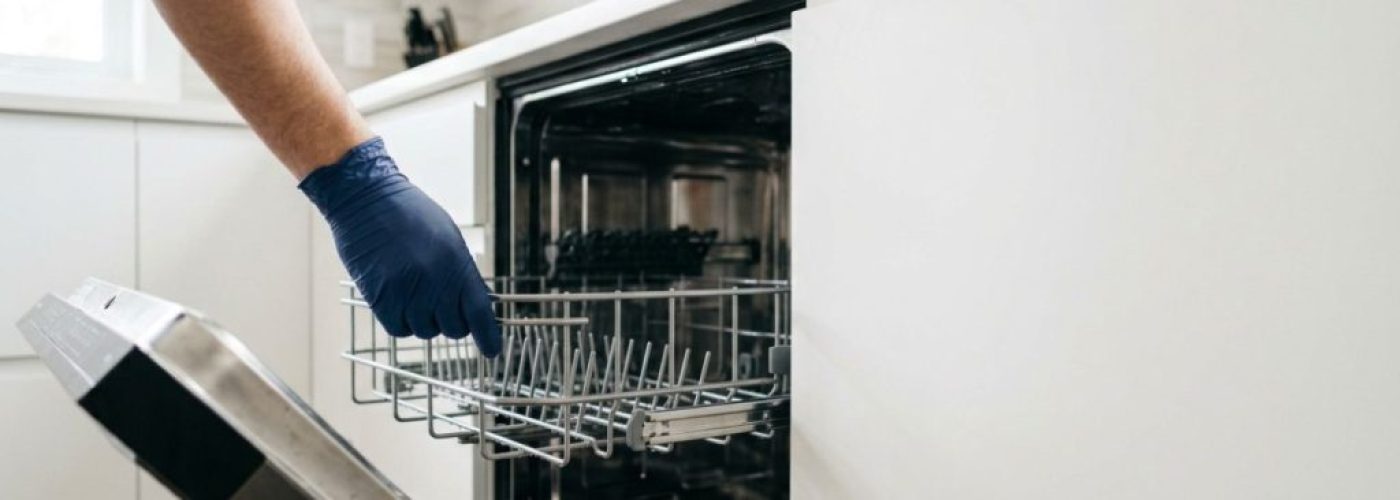
The full cycle may need to be tested because the dishwasher can wash normally but fail only during drainage. A technician may also check whether water is returning through the waste connection after the pump stops.
Appliances Repair Sharjah provides dishwasher repair in Sharjah for built-in, freestanding, integrated, countertop, and selected commercial dishwashers. Customers in Al Nahda, Muweilah, Al Taawun, and Al Qasimia may need help with filters, drain pumps, hoses, spray arms, heating faults, or control problems.
When Should You Call a Dishwasher Technician?
Call a technician if the dishwasher still smells, drains slowly, or leaves food on dishes after the filter has been cleaned properly.
You should also arrange an inspection if the filter is cracked, the locking tabs are broken, or the filter will not stay in position. Running the machine with a damaged filter may allow debris to reach the pump.
Stop using the dishwasher if it leaks, produces a burning smell, trips the power, or makes a loud grinding sound. These signs may point to a problem beyond normal filter cleaning.
Do not remove internal panels, electrical covers, or pump parts unless the manufacturer provides a safe user procedure.
When booking dishwasher service in Sharjah, explain what happens at the end of the cycle. Mention any standing water, error code, smell, unusual noise, or food residue left on dishes.
When Should You Call a Dishwasher Technician?
Call a technician if the dishwasher still smells, drains slowly, or leaves food on dishes after the filter has been cleaned properly.
You should also arrange an inspection if the filter is cracked, the locking tabs are broken, or the filter will not stay in position. Running the machine with a damaged filter may allow debris to reach the pump.
Stop using the dishwasher if it leaks, produces a burning smell, trips the power, or makes a loud grinding sound. These signs may point to a problem beyond normal filter cleaning.
Do not remove internal panels, electrical covers, or pump parts unless the manufacturer provides a safe user procedure.
When booking dishwasher service in Sharjah, explain what happens at the end of the cycle. Mention any standing water, error code, smell, unusual noise, or food residue left on dishes.
Final Thoughts
Knowing how to clean a dishwasher filter can improve drainage, reduce smells, and help the machine wash dishes more effectively.
Start by switching off the dishwasher and removing the lower rack. Find the filter, follow the correct removal method, and wash it with warm water and a soft brush. Clean visible debris from the surrounding area before fitting the filter securely.
The small details are what make the biggest difference. A filter that looks clean on top may still contain grease inside the mesh. A filter that has not been locked correctly may create new problems after cleaning.
If water remains after the cycle, read our guide about why a dishwasher has standing water and which safe checks may help identify the drainage problem.