Can an AC Compressor Be Repaired? Repair vs Replacement Explained
An AC compressor is one of the most important parts of an air-conditioning system. When it stops working properly, the unit may blow warm air, trip the circuit breaker, make loud noises, or fail to start at all. The outdoor unit may hum without running, or the compressor may switch on briefly before stopping again.
The first concern for most property owners is whether the compressor can be repaired or must be replaced. The answer depends on the exact fault. A weak capacitor, damaged contactor, loose wire, or refrigerant problem may look like compressor failure even when the compressor itself is still usable.
People searching for appliance repair in Sharjah should avoid approving compressor replacement before a complete diagnosis. Testing the electrical supply, pressure levels, condenser condition, and starting components can reveal whether the fault is repairable or whether replacement is the better option.
Can an AC Compressor Be Repaired?
Some compressor-related faults can be repaired without replacing the compressor. Electrical connections, terminals, external wiring, capacitors, relays, contactors, and overload protectors may be repairable or replaceable.
Internal compressor damage is different. The compressor contains a sealed motor and mechanical pumping parts. Burnt windings, internal seizure, heavy mechanical wear, or a grounded motor may require complete compressor replacement.
But here is the thing most people miss: several AC faults produce symptoms that look like compressor failure. A weak capacitor can stop the compressor from starting. Low voltage can cause repeated tripping. A dirty condenser can make the compressor overheat and shut down.
The real test is not simply whether the outdoor unit is making noise. A technician needs to check electrical readings, compressor current, refrigerant pressure, temperature, and the condition of the starting components.
Repair is practical when the fault is external or limited. Replacement becomes more likely when the compressor has serious internal electrical or mechanical damage.
Quick AC Compressor Symptom Checklist
Check these signs before deciding on repair or replacement:
AC Compressor Faults and Repair Options
Some compressor problems come from repairable external parts such as capacitors, contactors, wiring, or refrigerant conditions. Internal winding damage, mechanical wear, or seizure may make complete compressor replacement necessary.
1. Weak or Failed Start Capacitor
The start or run capacitor helps the compressor motor begin operating and continue running smoothly. When the capacitor becomes weak, the compressor may hum, click, or fail to start.
A damaged capacitor may look swollen, cracked, or leaking. However, a capacitor can also fail without visible damage. Proper electrical testing is needed to confirm whether it is holding the correct charge.
Do not touch a capacitor even after the power has been switched off. It may hold an electrical charge.
If the outdoor unit hums without starting, stop switching it on repeatedly. The capacitor and compressor current should be checked before the motor overheats.
2. Faulty Contactor or Start Relay
The contactor and relay control the electrical supply to the compressor. If the contacts become burnt, loose, or stuck, the compressor may not receive steady power.
You may hear clicking from the outdoor unit without the compressor starting. In other cases, the compressor starts and stops because the electrical connection is unstable.
Dust, insects, heat, and repeated electrical switching can damage these parts. A worn contactor may also create visible burning marks around the terminals.
Repeated clicking does not automatically mean the compressor has failed. The contactor, relay, capacitor, and electrical supply should be tested first.
3. Incorrect Voltage or Wiring Problem
The compressor needs the correct voltage to start and operate safely. Low voltage, loose terminals, damaged wiring, or an unstable electrical supply can stop it from running properly.
A voltage problem may cause the compressor to hum, overheat, trip the breaker, or shut down after a short time. Burnt connectors can also restrict current and create heat around the terminals.
The outdoor unit may appear to have a serious compressor fault when the real cause is a damaged cable, loose connection, or supply issue.
If the breaker trips repeatedly or the compressor starts only sometimes, the supply voltage, wiring, terminals, and protective devices need professional testing.
4. Dirty Condenser and Compressor
The condenser coils release heat from the refrigerant. When the coils are covered with dirt, dust, or debris, the system cannot remove heat efficiently.
The compressor then works harder and becomes hotter. An overload protector may switch it off to prevent damage.
A blocked condenser can create weak cooling, high electricity use, long running times, and repeated compressor shutdowns. The condenser fan should also be checked because poor airflow can create similar symptoms.
Keep the space around the outdoor unit clear. If the compressor becomes very hot or repeatedly cuts out, stop running the AC until the condenser and fan are checked.
5. Low Refrigerant or Refrigerant Leakage
The compressor moves refrigerant through the AC system. If the refrigerant level becomes too low because of a leak, the compressor may run under abnormal pressure and temperature conditions.
Weak cooling, ice on the pipes, long operating times, and unusual compressor noise can appear when refrigerant is low. Simply adding gas without repairing the leak does not solve the cause.
A technician needs to locate the leak, assess the damaged area, repair it where possible, and test the system before charging the correct refrigerant amount.
Do not approve a gas refill without asking whether the system was checked for leakage. Pressure testing and leak diagnosis should come first.
6. Damaged Compressor Windings
The compressor motor contains electrical windings. Heat, voltage problems, age, or internal wear can damage the insulation around these windings.
A winding fault may cause the breaker to trip, the compressor to overheat, or the motor to remain silent. Electrical testing can show whether the windings are open, shorted, or connected to the compressor body.
Minor damage to external terminals or wires may be repairable. Internal winding failure usually means the sealed compressor needs replacement.
Winding resistance and insulation tests help confirm whether the compressor has an internal motor fault or an external electrical issue before replacement is recommended.
AC Compressor Inspection and Repair Options
A compressor decision should be based on testing rather than guesswork. Several smaller faults can prevent the compressor from starting even when the sealed unit is still functional.
An AC compressor inspection may include:
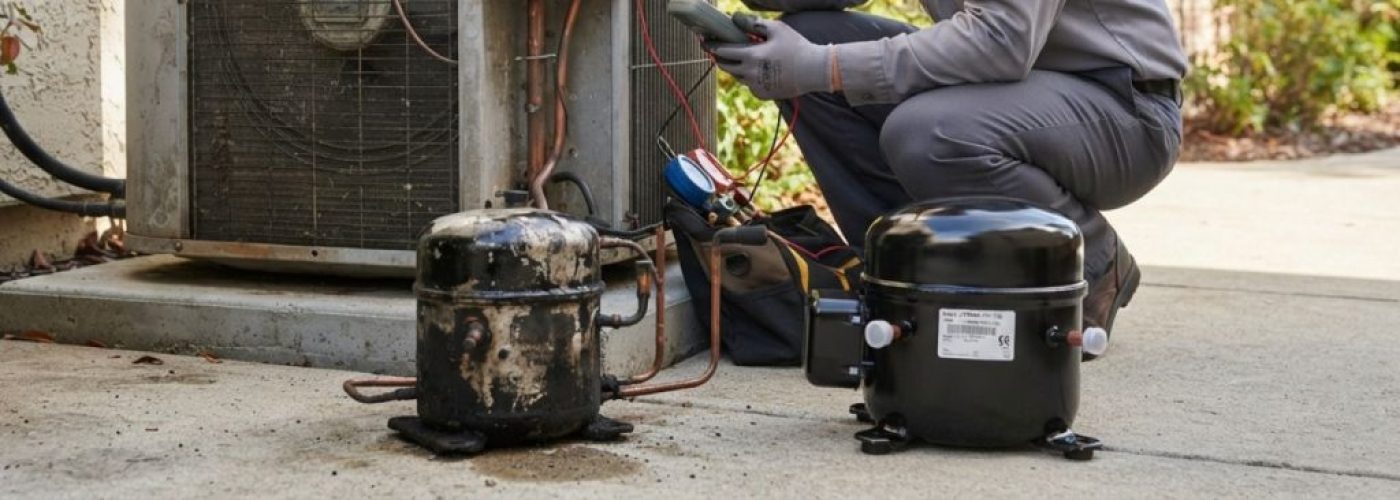
The technician should observe the system during startup and operation. A compressor may start normally but overheat after several minutes because of poor airflow, incorrect pressure, or an electrical fault.
Appliances Repair Sharjah provides AC repair in Sharjah for split, window, central, ducted, cassette, and portable systems. Customers in Muwaileh, Al Nahda, Al Qasimia, and Al Taawun may need help with compressors, capacitors, contactors, refrigerant leaks, fans, thermostats, or control faults.
When Should You Call an AC Technician?
Call an AC technician when the outdoor unit hums without starting, the breaker trips repeatedly, the compressor becomes extremely hot, or the AC continues blowing warm air after basic settings and filters have been checked.
You should also arrange an inspection if loud knocking, grinding, or electrical buzzing comes from the outdoor unit. A burning smell or damaged wiring needs immediate attention.
Switch off the AC if the compressor starts and stops every few minutes. Repeated short cycling can place additional pressure on the motor and starting components.
Do not open the compressor terminals, test live wiring, release refrigerant, or bypass protective devices. Compressor diagnosis requires electrical and pressure-testing equipment.
When booking AC repair in Sharjah, explain whether the outdoor fan runs, whether the compressor starts, and whether the breaker trips. Mention any noise, smell, error code, or recent drop in cooling.
Final Thoughts
An AC compressor can sometimes be repaired when the problem involves external electrical parts, wiring, starting components, airflow, or refrigerant conditions.
Complete compressor replacement may be needed when the internal windings are damaged, the motor is grounded, the mechanical parts are seized, or the compressor cannot create the required pressure.
Start with a complete diagnosis. A weak capacitor or faulty contactor can look like compressor failure but cost far less to correct. A dirty condenser or refrigerant leak can also place a working compressor under heavy strain.
Repair and replacement costs depend on the AC type, fault, part availability, labour, and system condition. Read our guide about AC repair cost in Sharjah to understand the main factors that affect a repair quotation.